Perpustakaan Buku
Katalog buku dan literatur penting mengenai sejarah gerakan perempuan.
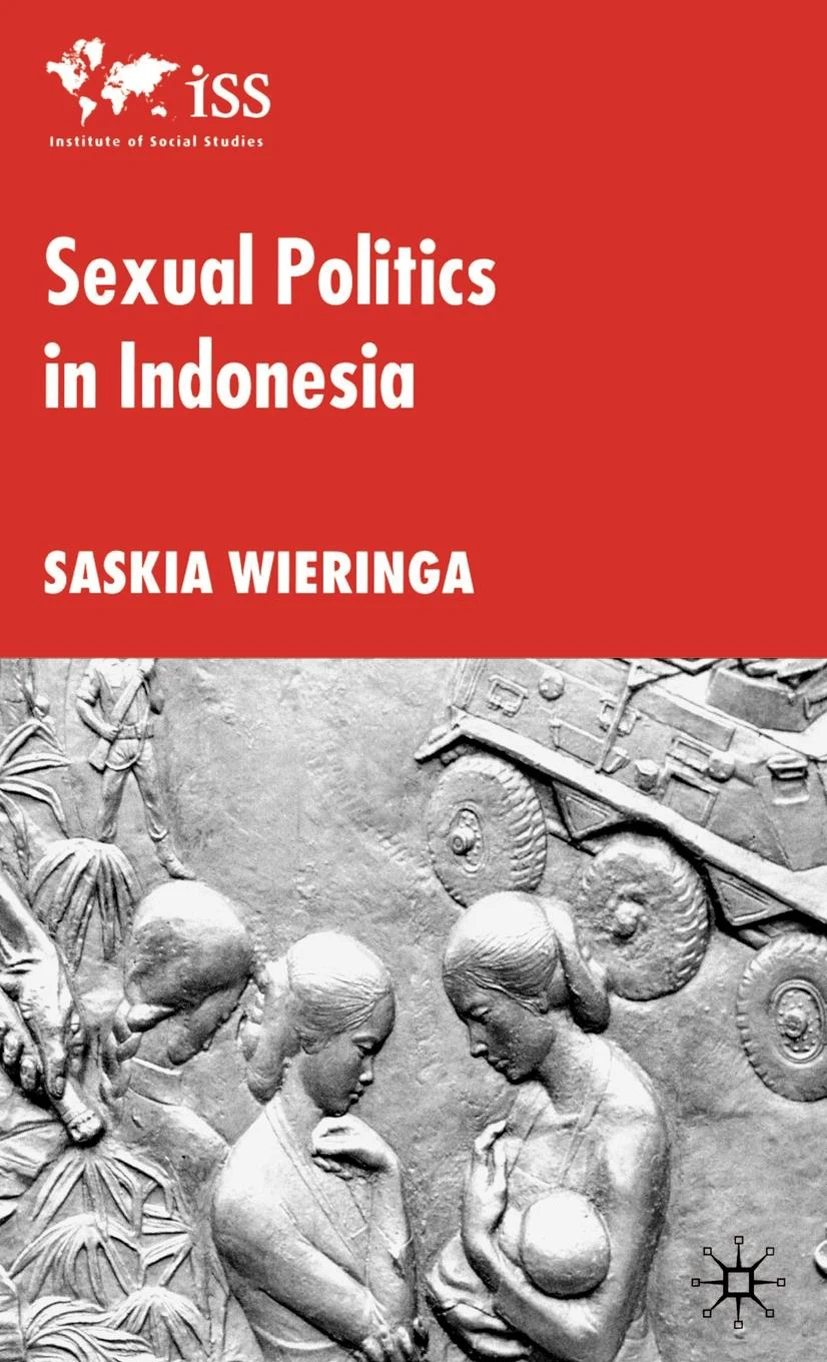
Sexual Politics in Indonesia
Saskia Wieringa
This book analyzes the interaction between nationalism, feminism and socialism in Indonesia since the beginning of the twentieth century until the New Order State of President Suharto. The focus is on the communist women's organization Gerwani, which was by 1965 the largest communist women's organization in the non-communist world. Gerwani members combined feminist demands such as a reform of the marriage law with an insistence upon a political role for women. The organization was destroyed in a campaign of sexual slander orchestrated by the military under General Suharto. Hundreds of thousands of people were killed. President Sukarno lost his power and General Suharto took over.

Women, Sexual Violence and the Indonesian Killings of 1965-66
Annie Pohlman
The Indonesian massacres of 1965-1966 claimed the lives of an estimated half a million men, women and children. Histories of this period of mass violence in Indonesia’s past have focused almost exclusively on top-level political and military actors, their roles in the violence, and their movements and mobilization of perpetrators. Based on extensive interviews with women survivors of the massacres and detention camps, this book provides the first in-depth analysis of sexualised forms of violence perpetrated against women and girl victims during this period. It looks at the stories of individual women caught up in the massacres and mass arrests, focusing on their testimonies and their experiences of violence and survival. The book aims not only to redress the lack of scholarly attention but also to provide significant new analysis on the gendered and gendering effects of sexual violence against women and girls in situations of genocidal violence.

Propaganda and the Genocide in Indonesia: Imagined Evil
Saskia Wieringa, Nursyahbani Katjasungkana
In Indonesia, the events of 1st October 1965 were followed by a campaign to annihilate the Communist Party and its alleged sympathisers. It resulted in the murder of an estimate of one million people – a genocide that counts as one of the largest mass murders after WWII – and the incarceration of another million, many of them for a decade or more without any legal process. This drive was justified and enabled by a propaganda campaign in which communists were painted as atheist, hypersexual, amoral and intent to destroy the nation. To date, the effects of this campaign are still felt, and the victims are denied the right of association and freedom of speech. This book presents the history of the genocide and propaganda campaign and the process towards the International People’s Tribunal on 1965 crimes against humanity in Indonesia (IPT 1965), which was held in November 2015 in The Hague, The Netherlands. The authors, an Indonesian Human Rights lawyer and a Dutch academic examine this unique event, which for the first time brings these crimes before an international court, and its verdict. They single out the campaign of hate propaganda as it provided the incitement to kill so many Indonesians and why this propaganda campaign is effective to this day. The first book on this topic, it fills a significant gap in Asian Studies and Genocide Studies.

Gender, Violence and Power in Indonesia: Across Time and Space
Katharine McGregor, Ana Dragojlovic, Hannah Loney
This book uses an interdisciplinary approach to chart how various forms of violence – domestic, military, legal and political – are not separate instances of violence, but rather embedded in structural inequalities brought about by colonialism, occupation and state violence. The book explores both case studies of individuals and of groups to examine experiences of violence within the context of gender and structures of power in modern Indonesian history and Indonesia-related diasporas. It argues that gendered violence is particularly important to consider in this region because of its complex history of armed conflict and authoritarian rule, the diversity of people that have been affected by violence, as well as the complexity of the religious and cultural communities involved. The book focuses in particular on textual narratives of violence, visualisations of violence, commemorations of violence and the politics of care.
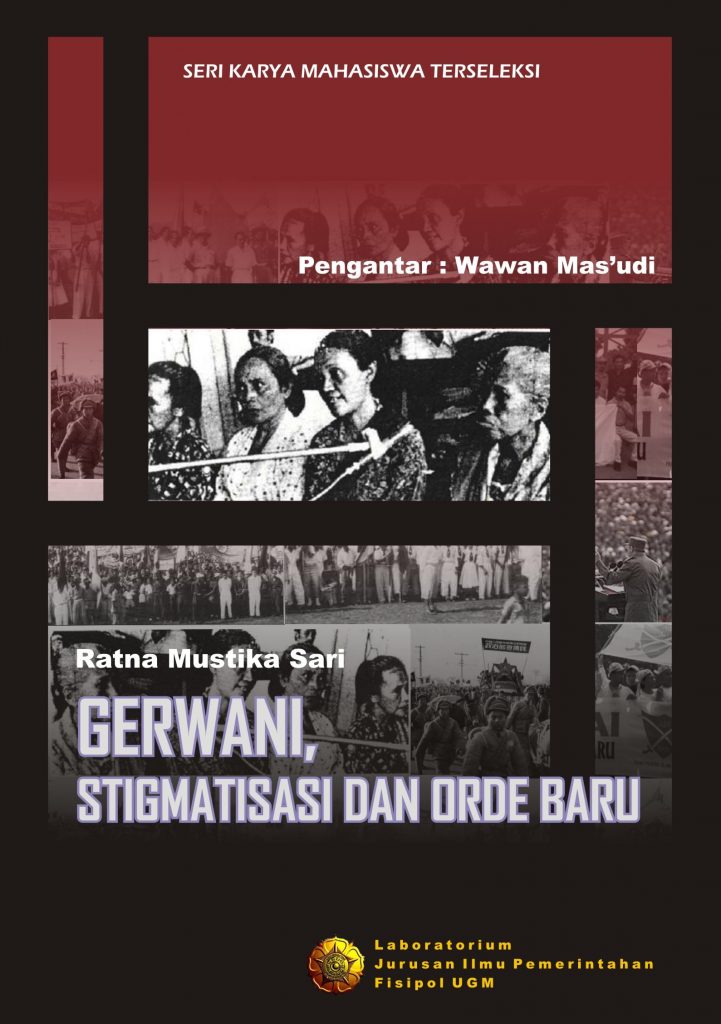
Gerwani, Stigmatisasi dan Orde Baru
Ratna Mustika Sari
The color of communist ideology inherent in the Gerwani movement eventually became the killer of the women’s movement itself, namely when the September 1965 incident erupted, and politically the PKI was seen as the party most responsible.

The End of Silence: Accounts of the 1965 Genocide in Indonesia
Soe Tjen Marching
In the late 1960s, between one and two million people were killed by Indonesian president Suharto's army in the name of suppressing communism-and more than fifty years later, the issue of stigmatisation is still relevant for many victims of the violence and their families. The End of Silence presents the stories of these individuals, revealing how many survivors from the period have been so strongly affected by the strategy used by Suharto and his Western allies that these survivors, still afraid to speak out, essentially serve to maintain the very ideology that led to their persecution.